Kuwait Civil ID Fine Check Online in 2026
My name is Saleh Muhammad. I am a Kuwaiti citizen, and I have been living outside Kuwait for more than 10 years. Even while I’m abroad, I still deal with Kuwaiti paperwork and government systems regularly, and I’ve helped friends, family, and other expats figure out issues like fines, renewals, and blocked services.
If you live in Kuwait, a Kuwait Civil ID fine check is not something you should do only when you have a problem. I recommend you treat it like a monthly habit. One unpaid fine can quietly grow into a bigger headache later, especially when you try to renew residency, transfer a visa, or travel.
In this guide, I will walk you through the exact ways to check and pay Civil ID related fines online in 2026, using the official government channels. I’ll also share the practical tips and “small details” that most websites skip.
What Is the Kuwait Civil ID and Why Fines Get Linked to It
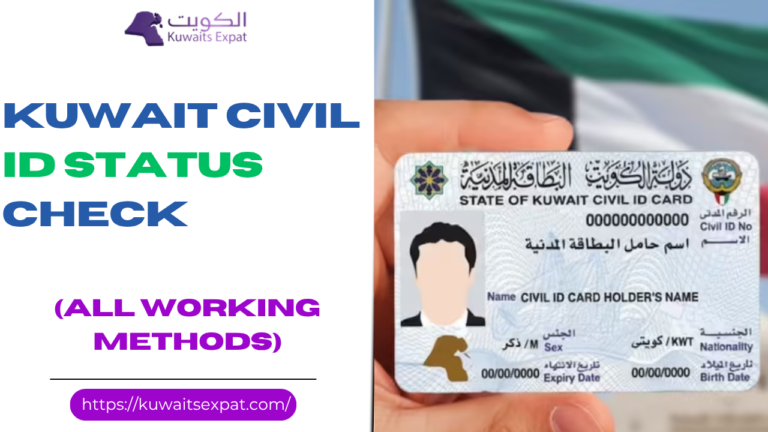
The Kuwait Civil ID is the national identity card issued by PACI (Public Authority for Civil Information). Every Kuwaiti citizen and every resident must have one.
Your Civil ID number is the key identifier that connects you to many government systems, including:
- Residency and renewals
- MOI records and violations
- Some traffic and vehicle related records
- Government eServices access
Quick facts you should know
| Item | Details |
|---|---|
| Issuing authority | PACI (Public Authority for Civil Information) |
| Civil ID number length | 12 digits |
| Who needs it | Kuwaiti citizens and all residents |
| Why it matters for fines | Many violations and penalties can be queried using the Civil ID |
From what I’ve seen over the years, the Civil ID is often the fastest way to search fines because it avoids confusion with names (especially when names are spelled differently in English).
Common Reasons You Might Have Fines Under Your Civil ID
People usually assume “Civil ID fines” only means traffic tickets. In reality, when people search this topic, they often mean any MOI-linked fines that can be queried using the Civil ID number.
Here are the most common categories I see residents and expats deal with:
| Fine category | Examples | Why it becomes a problem |
|---|---|---|
| Traffic violations | Speeding, signal violations, parking issues | Can block vehicle services or cause renewal issues in some cases |
| Residency-related penalties | Late renewals, administrative penalties | Can impact visa renewal and legal status |
| Civil or administrative violations | Certain MOI-linked penalties | May block services until cleared |
Important note: Not every fine in Kuwait is stored in one single place. Some services are MOI-based, some are specific to traffic systems, and PACI is mainly your identity authority. That’s why I always recommend checking through official MOI eServices first, then Sahel second.
How to Check Kuwait Civil ID Fines Online (MOI eServices Step by Step)
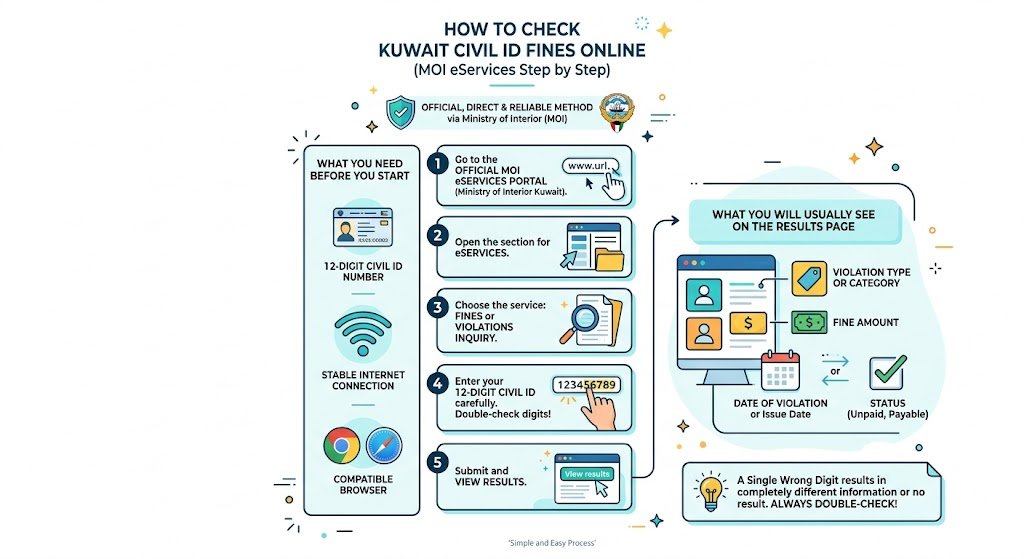
The most direct and reliable method in my experience is the Ministry of Interior (MOI) eServices portal. It is official, and it typically shows violation details clearly.
What you need before you start
- Your 12-digit Civil ID number
- A stable internet connection
- A browser that works well with government sites (Chrome or Safari usually works fine)
Step by step: Civil ID fine inquiry on MOI portal
- Go to the official MOI eServices portal (Ministry of Interior Kuwait).
- Open the section for eServices.
- Choose the service related to fines or violations inquiry.
- Enter your Civil ID number carefully (double-check digits).
- Submit and view results.
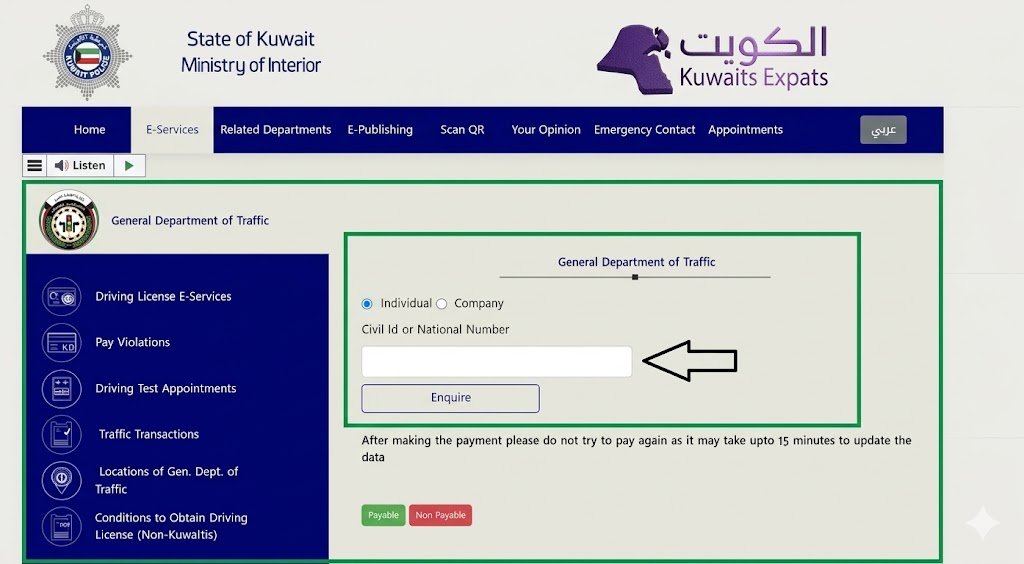
What you will usually see on the results page
- Violation type or category
- Fine amount
- Date of violation or issue date
- Status (unpaid, payable, sometimes partially paid depending on the case)
From my personal experience helping others, the biggest reason people think “the system is wrong” is simply a digit mistake. A single wrong number gives you a completely different result or no result at all.
How to Pay Kuwait Civil ID Fines Online (MOI Payment)
Once you can see the fine, paying it is usually straightforward.
Typical payment steps
- Click the payment option next to the fine (often shown as Pay or Pay Now).
- Choose your payment method (commonly KNET for local debit cards).
- Complete the payment.
- Save your payment confirmation.
My advice about receipts
Always save proof of payment in two places:
- Screenshot on your phone
- Email or cloud storage copy (even a simple PDF)
If you ever face a “paid but still showing” issue, that receipt is what solves the problem faster.
Checking and Paying Fines Using the Sahel App (Official Government App)
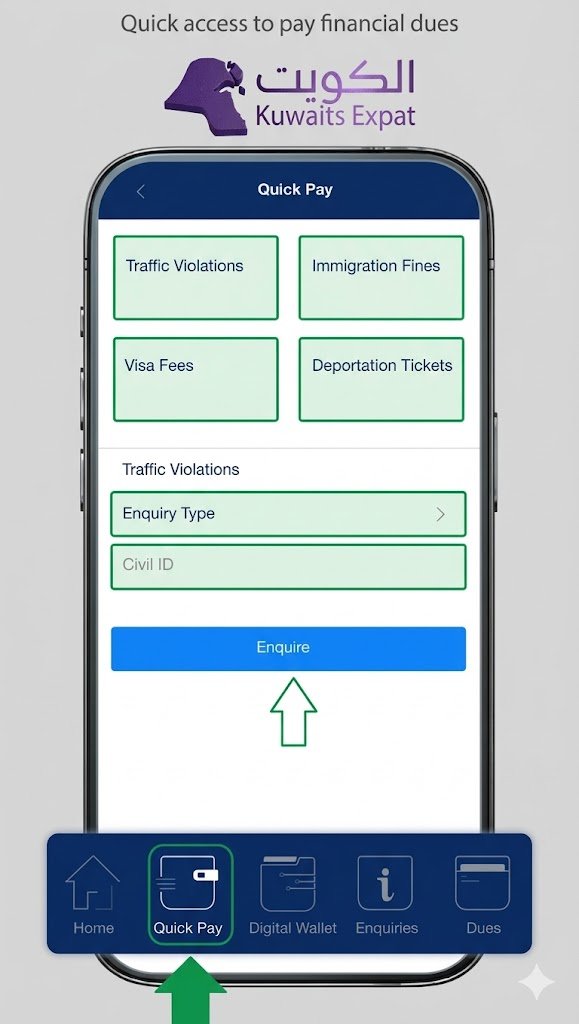
If you live in Kuwait and you are not using Sahel yet, you are making life harder than it needs to be. Sahel is designed to unify government services, and for many residents it’s the easiest way to check updates and notifications.
Why Sahel is useful (based on what I see people use it for)
- Faster access on mobile
- Notifications in many cases (depending on enabled services)
- Less time compared to visiting a service center
Step by step: Fine check in Sahel
- Download Sahel (official app) on iOS or Android.
- Sign in using your Civil ID authentication method (often linked with Mobile ID).
- Go to services, then look for MOI-related inquiries.
- View fines and proceed to payment if available.
If MOI portal is slow on certain days, Sahel sometimes feels smoother because it’s mobile-first. But if one method doesn’t show a fine, I check the other, because systems can update at different speeds.
Other Reliable Ways to Check and Pay Civil ID Related Fines (Offline Options)
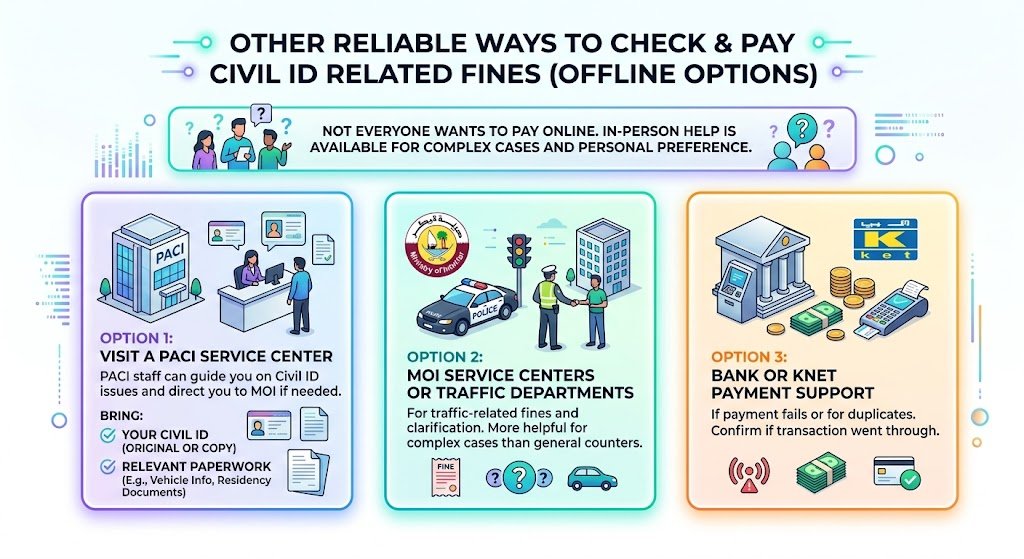
Not everyone wants to pay online, and sometimes you genuinely need in-person help (especially for complex cases).
Option 1: Visit a PACI service center
PACI staff can guide you on Civil ID related issues and direct you if your issue is actually MOI-based. Bring:
- Your Civil ID (or a copy)
- Any relevant paperwork (vehicle info, residency documents)
Option 2: MOI service centers or traffic departments
If your fine is traffic related and you need clarification, traffic departments can be more helpful than general counters.
Option 3: Bank or KNET payment support
If your payment fails or you see a duplicate transaction, your bank’s support can confirm whether the transaction went through.
Best Method Comparison (Fastest Option for Your Situation)
| Method | Best for | Time (typical) | What you need |
|---|---|---|---|
| MOI eServices website | Most direct official fine inquiry and payment | 5 to 10 minutes | Civil ID number, payment card |
| Sahel app | Mobile users, convenient access, sometimes notifications | 3 to 8 minutes | Sahel login, Civil ID authentication |
| PACI center visit | People who prefer in-person guidance | 30 to 90 minutes | Civil ID, documents |
| MOI or traffic department visit | Disputes, detailed clarification | 30 to 120 minutes | Civil ID, case details, vehicle info |
In my own routine, I use MOI first when I want detailed listings, and Sahel when I want speed and convenience.
Why You Must Clear Civil ID Fines in Kuwait (What Can Happen If You Ignore Them)
This is the part people underestimate.
Unpaid fines can lead to:
- Added penalties depending on the fine type and delay
- Delays in residency services
- Blocked government transactions until payment
- Travel complications in specific cases
I’m not saying every small fine will automatically cause a travel ban. But I have seen people get surprised at the worst time, like right before travel or during residency renewal. The smarter approach is simple: check regularly and clear fines early.
How Often Should You Check? My Practical Recommendation
Here’s what I personally advise friends and expats:
- If you drive daily: check every 2 to 4 weeks
- If you travel often: check before booking and again 2 to 3 days before travel
- If residency renewal is coming: check at least 1 month early
Even if you’re careful, mistakes happen. Sometimes a parking issue is recorded. Sometimes a vehicle related violation is linked to your record unexpectedly. Regular checks prevent last-minute stress.
Common Problems and Fixes (What I See People Struggle With)
| Problem | Why it happens | What you should do |
|---|---|---|
| MOI website not loading | High traffic, browser issues | Try a different browser or switch to Sahel |
| Fine shows but payment fails | Card restrictions, gateway timeout | Retry later, use another card, confirm with bank |
| Paid but fine still appears | System sync delay | Wait 24 to 72 hours, keep receipt, recheck |
| No fines appear but you expect one | Fine not posted yet or different category | Check again later, use Sahel, or contact MOI |
If you paid and it still shows after a few days, that’s when the saved receipt becomes your best friend.
Safety Tip: Avoid Fake Links and Unofficial Sites
Because this topic is popular, scammers sometimes create fake pages that look like MOI or payment portals.
My rule is simple:
- Only use official MOI eServices, Sahel, and official government platforms
- Do not trust random “fine check” websites that ask for your card details
If a link looks suspicious, don’t use it.
Conclusion: Do Your Kuwait Civil ID Fine Check Before It Becomes a Problem
A Kuwait Civil ID fine check in 2026 is easy if you stick to official channels. Use the MOI eServices portal for a full detailed inquiry and payment. Use the Sahel app for fast mobile access. If you need help, visit PACI or MOI service centers with your Civil ID and documents.
If you take one piece of advice from me: do not wait until renewal time or travel day. Check regularly and keep your record clean.
FAQs: Kuwait Civil ID Fine Check
Can I check fines without creating an account?
Yes, many MOI inquiry services allow you to check using only your Civil ID number. Some features may require authentication depending on the service.
Are traffic fines connected to the Civil ID?
Many violations can be searched using the Civil ID because it is a primary identifier in government systems. Some traffic services may also be searched using vehicle details.
What if the MOI site is not working?
Try Sahel first. If it still doesn’t work, try again during off-peak hours, or visit an MOI service center if it’s urgent.
Is Sahel an official app?
Yes. Sahel is an official Kuwait government app used for accessing multiple government services.
Do fines expire in Kuwait?
In general, fines remain until settled unless there is an official waiver or amnesty. Do not assume a fine will disappear on its own.